


- Products
-

 Networking
- > AI Smart Managed Series
- > Industrial Ethernet
- Industrial PoE Media Converter
- Industrial Media Converter
- Industrial Unmanaged PoE Switch
- Industrial Managed PoE Switch
- Industrial Unmanaged Ethernet Switch
- Industrial Managed Ethernet Switch
- Industrial Serial Fiber Converter
- Industrial PoE Injector
- Industrial PoE Splitter
- Industrial PoE Extender
- Industrial Optical Switch
- Industrial PD Switch
- DIN-Rail Power Supply
- Rackmount DIN-Rail Bracket
- LED Screen Fiber Converter
- Industrial Ethernet Switch & 5G Router
- Industrial EOC Converter
- > Commercial Ethernet
-
 Video Transmission
-
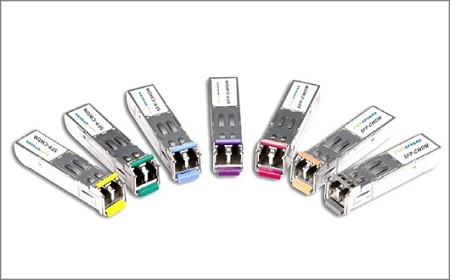 SFP Transceiver
-
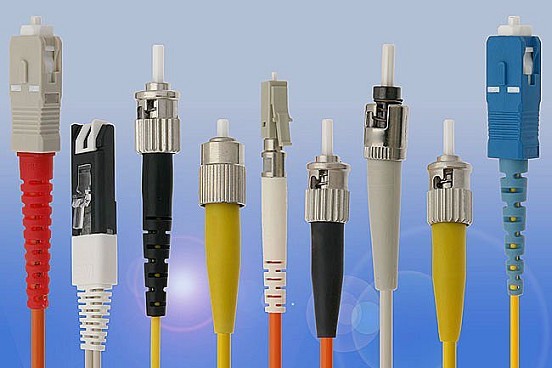 Other Fiber Optic & Networking Products
-
- Solutions
- News
- About
- Contact




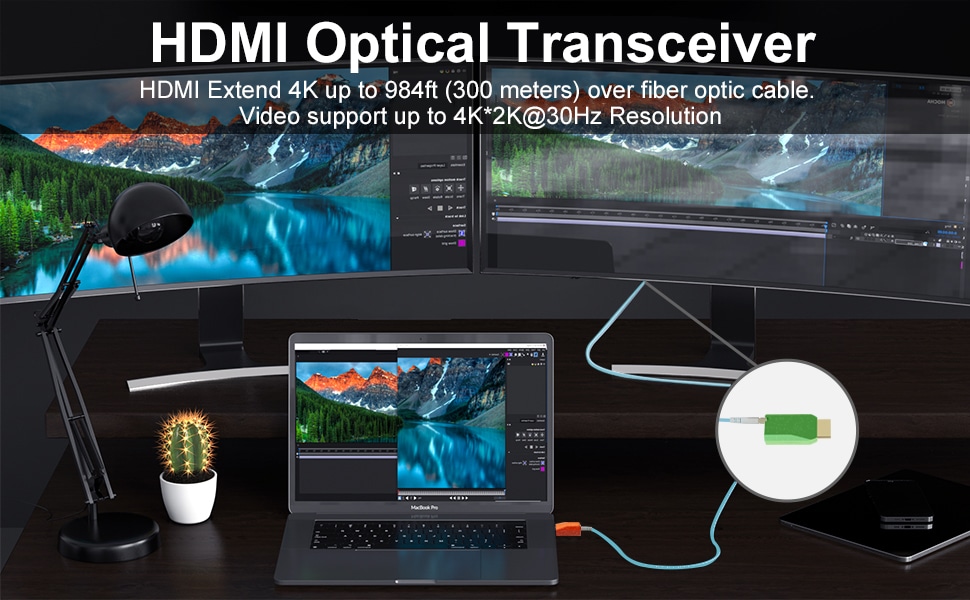
An HDMI Extender is a device that transmits high-definition HDMI audio and video signals through optical media. It consists of an transmitting end (TX) and a receiving end (RX), capable of converting HDMI electrical signals into optical signals for transmission, and then restoring them to electrical signals to be output to display devices, addressing the needs for long-distance and high-quality transmission. For example, the E-link LNK-108M model, which supports 4K/30Hz, is a mini HDMI Extender suitable for large-screen displays, conference systems, and home entertainment scenarios.
Main types:
According to the type of optical fiber, it can be divided into multi-mode HDMI Extenders. The LNK-108M model, for instance, uses single-core multi-mode optical fibers (OM3/OM4/OM5) for transmission, and is currently a mainstream practical type, capable of meeting medium to long-distance transmission requirements.
Core features and advantages:
Outstanding transmission performance: Supports HDMI 1.4 standard, 4K@30Hz and 1080p among mainstream resolutions, and is compatible with various high-definition audio formats; With WDM technology, audio and video transmission can be achieved through a single-core fiber optic cable. OM3 optical fiber can transmit up to 300m, and OM5 can reach 500m.
Convenient and worry-free use: No additional setup or debugging required, plug-and-play and supports hot swapping; Only the receiving end needs an external 5VDC power supply, overall power consumption is low, and the total working current is only 75mA.
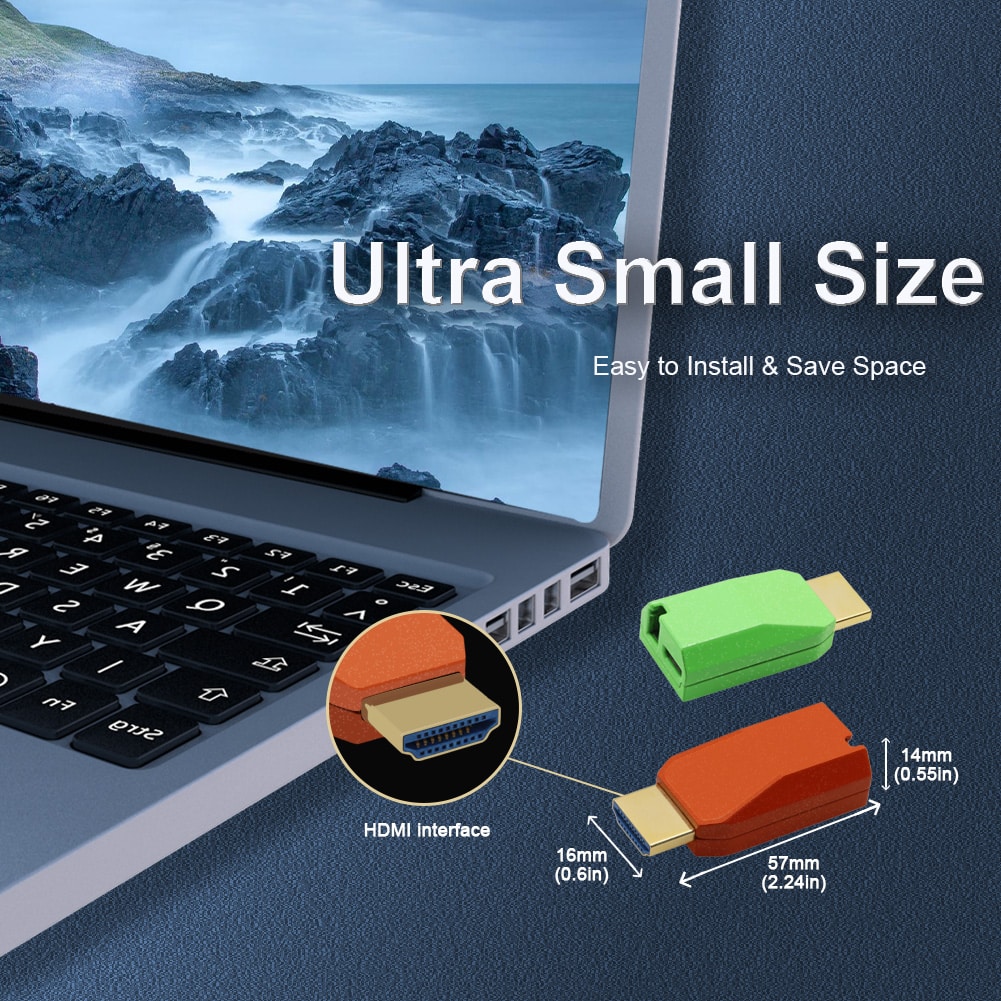
High stability and practicality: No copper conductor design, outstanding anti-interference ability, RFI/EMI radiation can be ignored; Using LC optical fiber interface, the equipment is small (57x16x14mm), weighs only 0.1kg, and is easy to install and deploy.
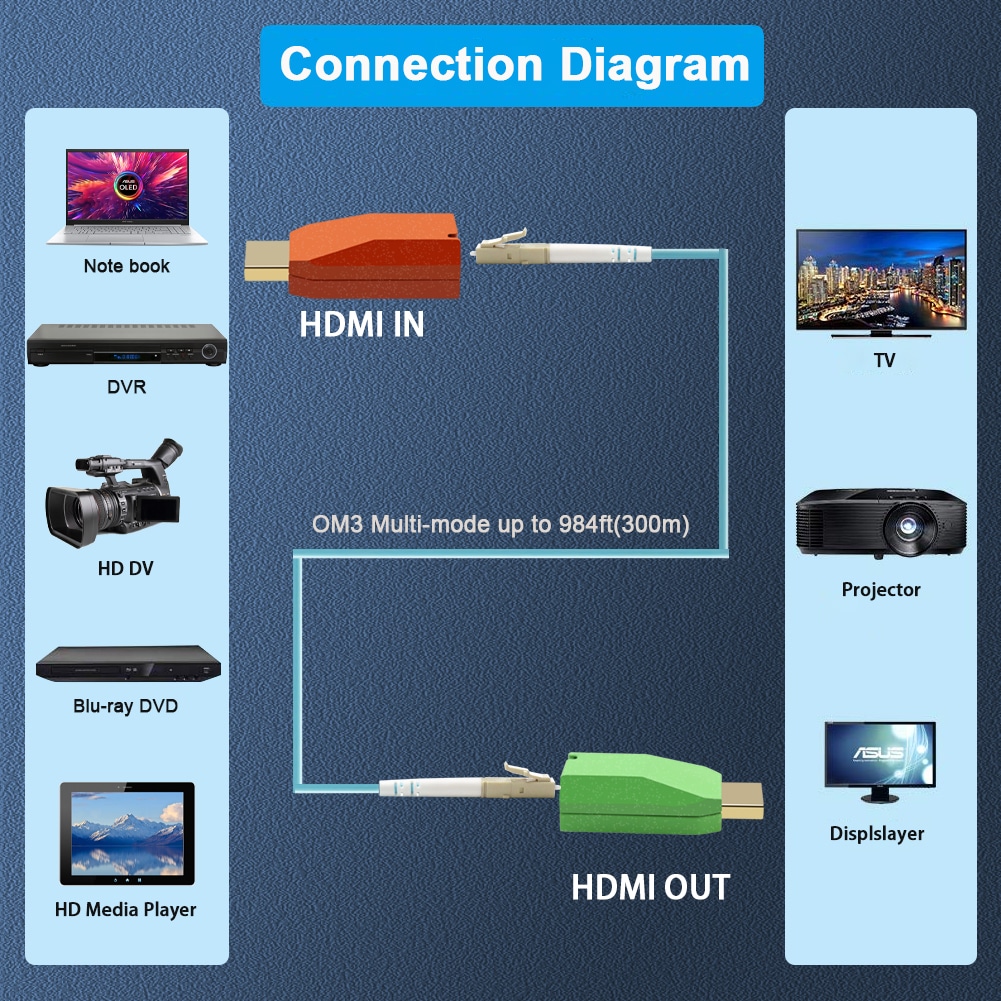
How to Choose the Right HDMI Extender
Match transmission requirements: Based on the resolution (such as whether 4K/30Hz is required) and transmission distance, select the corresponding model that is compatible with the optical fiber, such as models that support OM5 optical fiber for long distances.
Pay attention to interfaces and compatibility: Confirm that the device supports the required standards such as HDMI 1.4, whether the optical interface is of the commonly used LC type, and also note that some models do not support HDCP and transparent EDID transmission, and need to be judged based on the usage scenario.
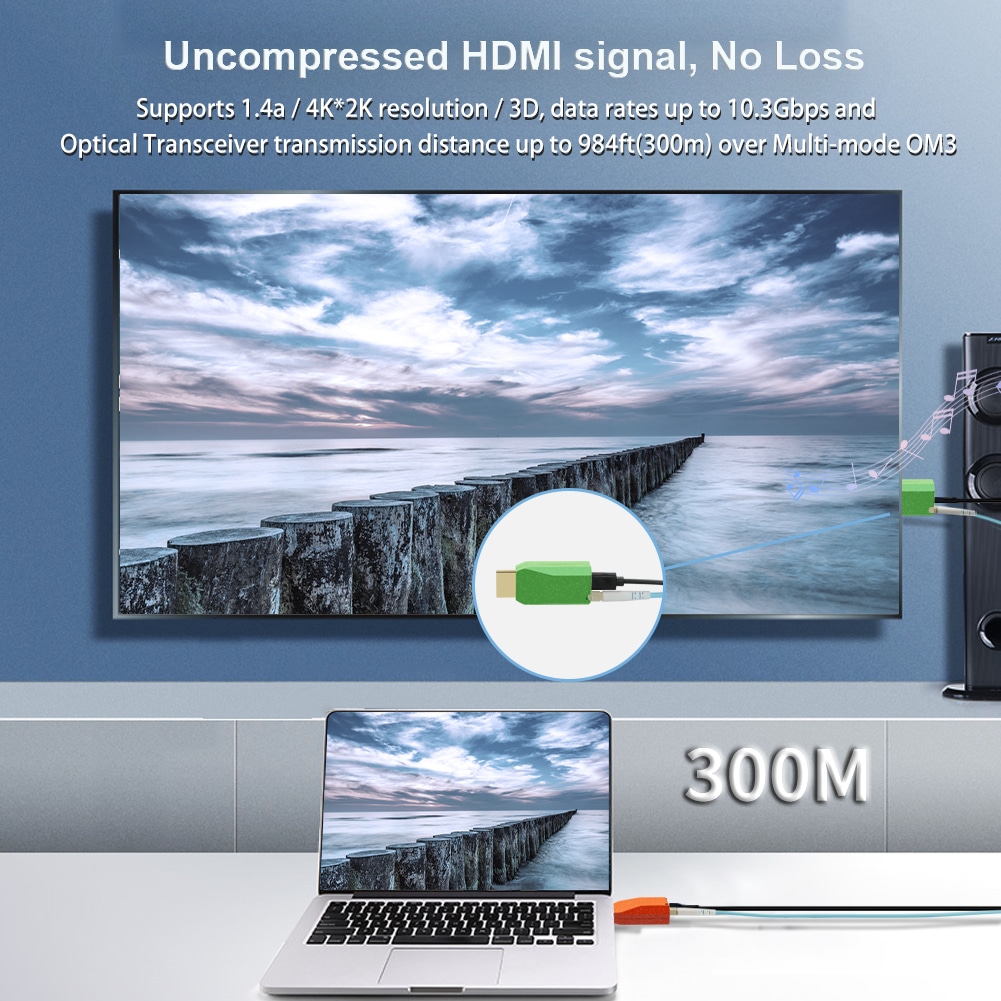
Combine with usage scenarios: For home entertainment, focus on mini portable models; for meetings or large screen displays, pay attention to stability and anti-interference, and preferentially choose products that have passed CE, RoHS, and FCC certifications.


