








In industrial communication scenarios, traditional serial port signals are often affected by electromagnetic interference and have limited transmission distances, which have long hindered the stable operation of equipment. The E-link LNK-IRS93-SC series industrial serial port fiber optic modems (serial port optical network units) convert RS232, RS485, and RS422 serial port signals into optical fiber signals for transmission.

This effectively overcomes the shortcomings of traditional communication methods. With high stability and long transmission distances, they have become core communication components in industrial control, stage lighting, and other fields.
Product Definition
LNK-IRS93-SC is an industrial three-in-one serial port optical conversion device that complies with EIA/TIA standards for RS232, RS485, and RS422, and is a plug-and-play type serial port optical modem. The fiber optic modem integrates multiple serial port interfaces, with a maximum transmission rate of 2 Mbps, capable of achieving bidirectional conversion between serial port signals and optical signals. It is specifically designed to extend the communication distance of serial ports and is suitable for the networking of various industrial serial devices.

Working Principle
The core principle of this device is the mutual conversion of optical and electrical signals. The front-end receives RS232, RS485 or RS422 electrical signals from the terminal device. The internal circuit modulates the electrical signals into optical signals and transmits them over a long distance through an optical fiber medium.

The receiving end device then demodulates the optical signals back into standard serial port electrical signals for the subsequent device to read. The entire data transmission process is transparent. The fiber optic modem can adapt to different baud rates on its own without the need for additional parameter settings. Moreover, the optical transmission characteristics can isolate electromagnetic interference, ground loop interference and lightning damage, ensuring the complete transmission of data.

Installation and Usage
- Hardware Installation: The equipment supports two installation methods: DIN rail mounting and wall mounting. The factory default comes with a rail bracket, and the packaging includes wall mounting accessories. Simply fix the equipment according to the on-site environment and it supports hot-swapping operation.
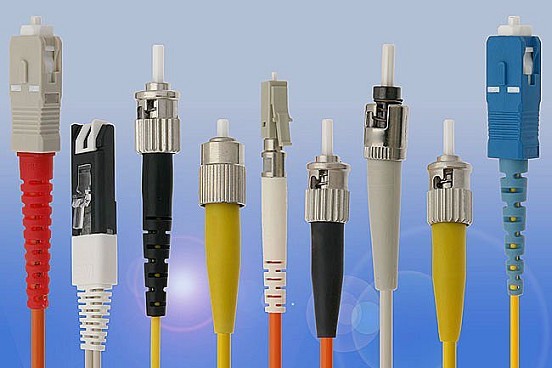
- Wiring Connection: Connect the serial port device using industrial terminals, distinguishing the TxD, RxD, D+, D-, GND interfaces; for the optical fiber interface, the default standard is SC interface, but ST, FC, LC connectors can also be selected. Connect the two ends of the optical fiber to the optical ports of the two optical modems respectively.
- Power Supply Connection: Connect to a DC 12V – 48V direct current power supply. The equipment’s power consumption is less than 5W. Once the power is turned on, the indicator light will light up normally, indicating successful power connection.
- Debugging and Operation: The equipment does not require parameter configuration. After wiring is completed, it can automatically match the baud rate and communication protocol, and directly achieve two-way data transmission.

Core Features and Importance
This serial port fiber optic modem has extremely strong adaptability to industrial environments. Its operating temperature range is from -25℃ to 75℃, and the storage temperature range can reach -40℃ to 85℃. It can operate stably in both high and low temperature environments. The fiber optic modem is equipped with 15KV static protection and 1500W/second surge protection, significantly enhancing the risk-resistance capability of industrial sites.

The transmission distance is outstanding. For multimode fiber, the maximum transmission distance is 5 kilometers, and for single-mode fiber, it can reach up to 80 kilometers, completely solving the transmission limitations of traditional RS232 (only 15 meters) and RS485/422 (only 1000 meters). This fiber optic modem not only improves the reliability and confidentiality of industrial data communication, but also reduces the probability of equipment failure, making it a key device for ensuring the continuous operation of industrial systems.
Application Scenarios

The fiber optic modem has a wide range of applications. It is mainly used in various industrial automation control and process control systems. It is also compatible with scenarios such as stage lighting DMX512 communication and traffic signal control.
In scenarios like data center monitoring and remote equipment operation, long-distance serial communication links can be established to achieve data exchange between the monitoring room and remote serial devices. Currently, this fiber optic modem has been widely implemented in various industry scenarios that require long-distance and highly stable serial transmission.

The LNK-IRS93-SC series industrial serial port optical modem, with its solid hardware protection, flexible installation method, extremely long transmission distance and no-debugging usage advantages, perfectly compensates for the shortcomings of traditional serial communication. As a basic conversion device for industrial communication, it meets the needs of multiple industries and is an ideal choice for building a secure, stable and long-distance serial communication network.


